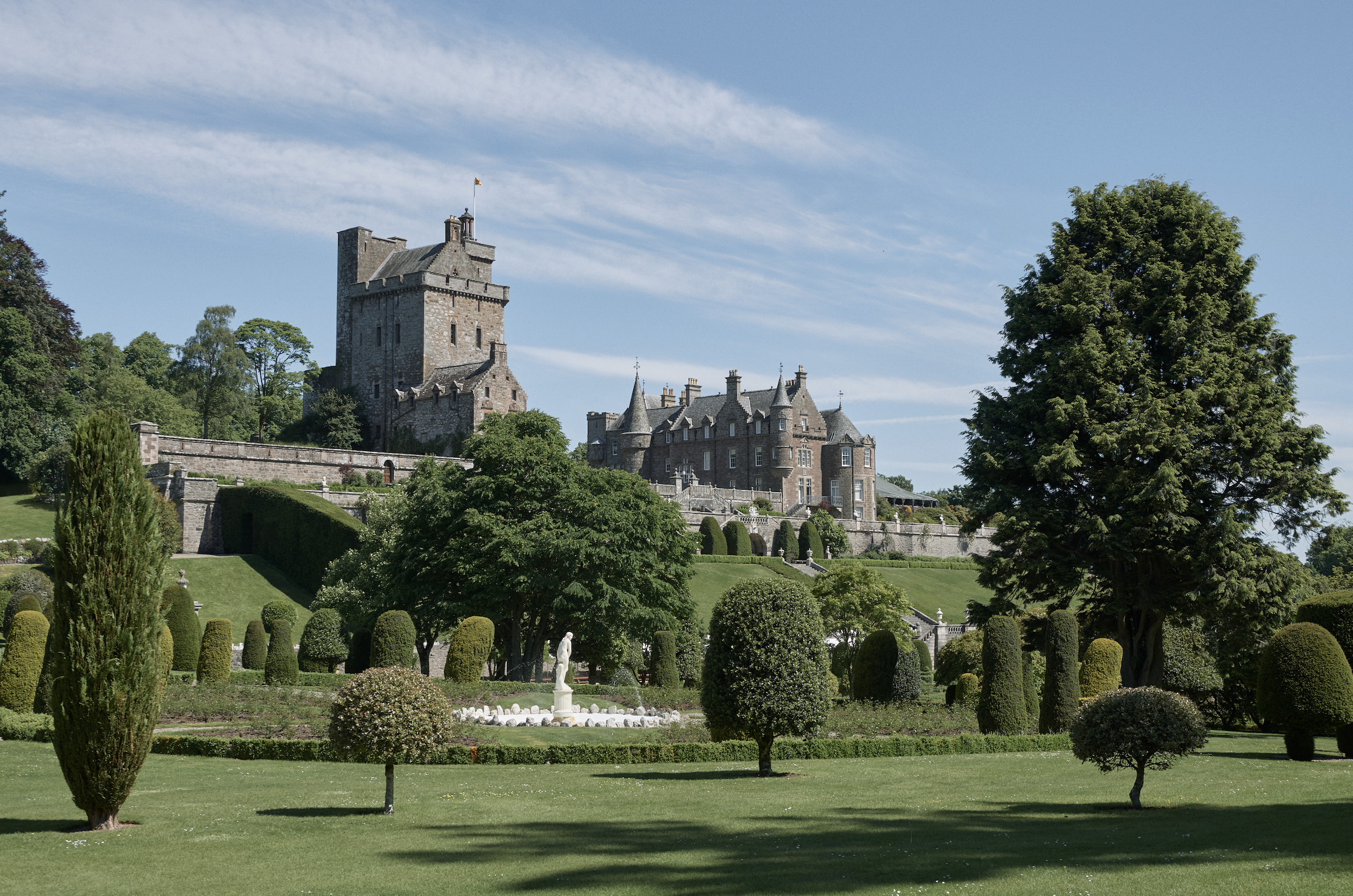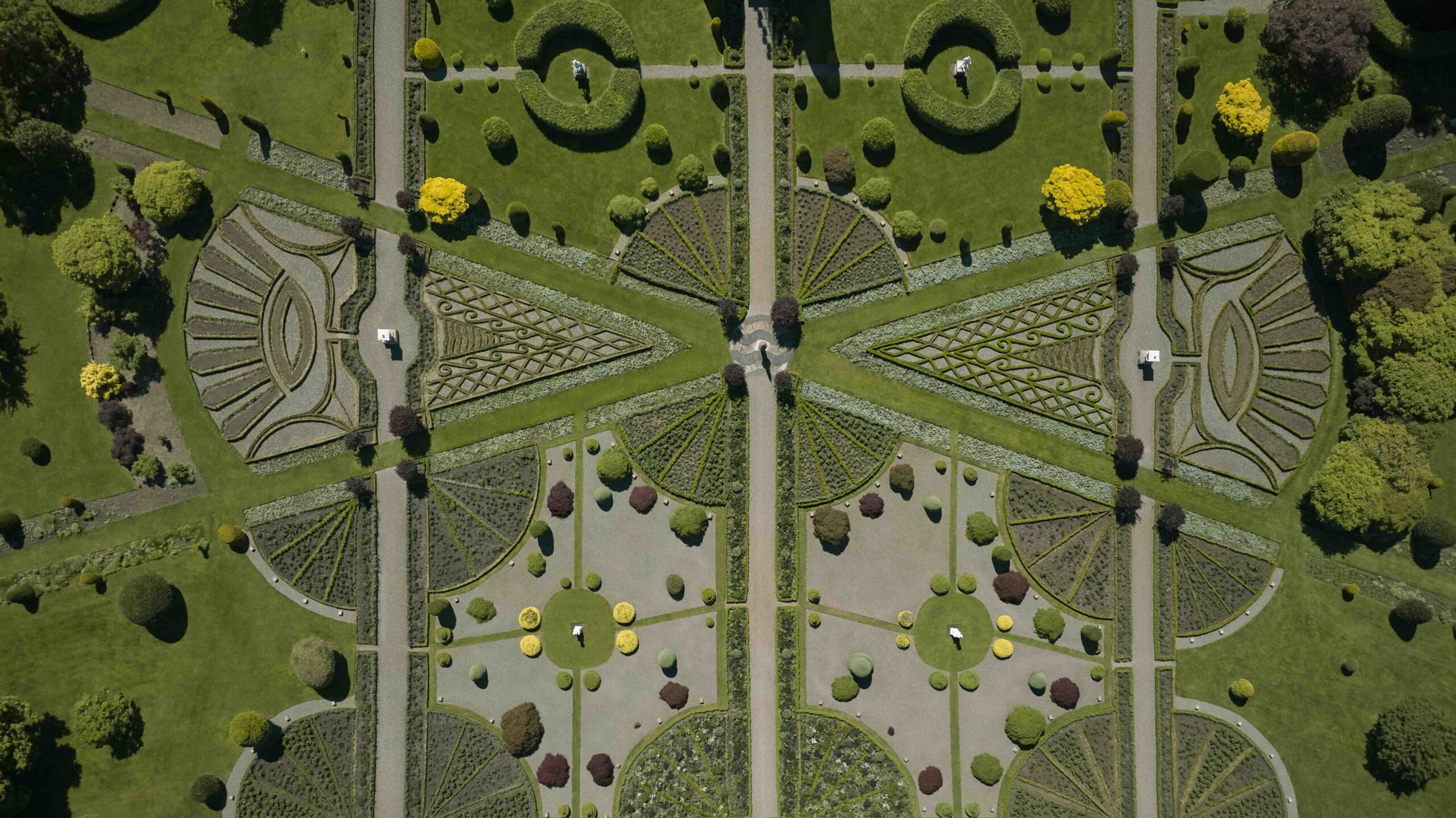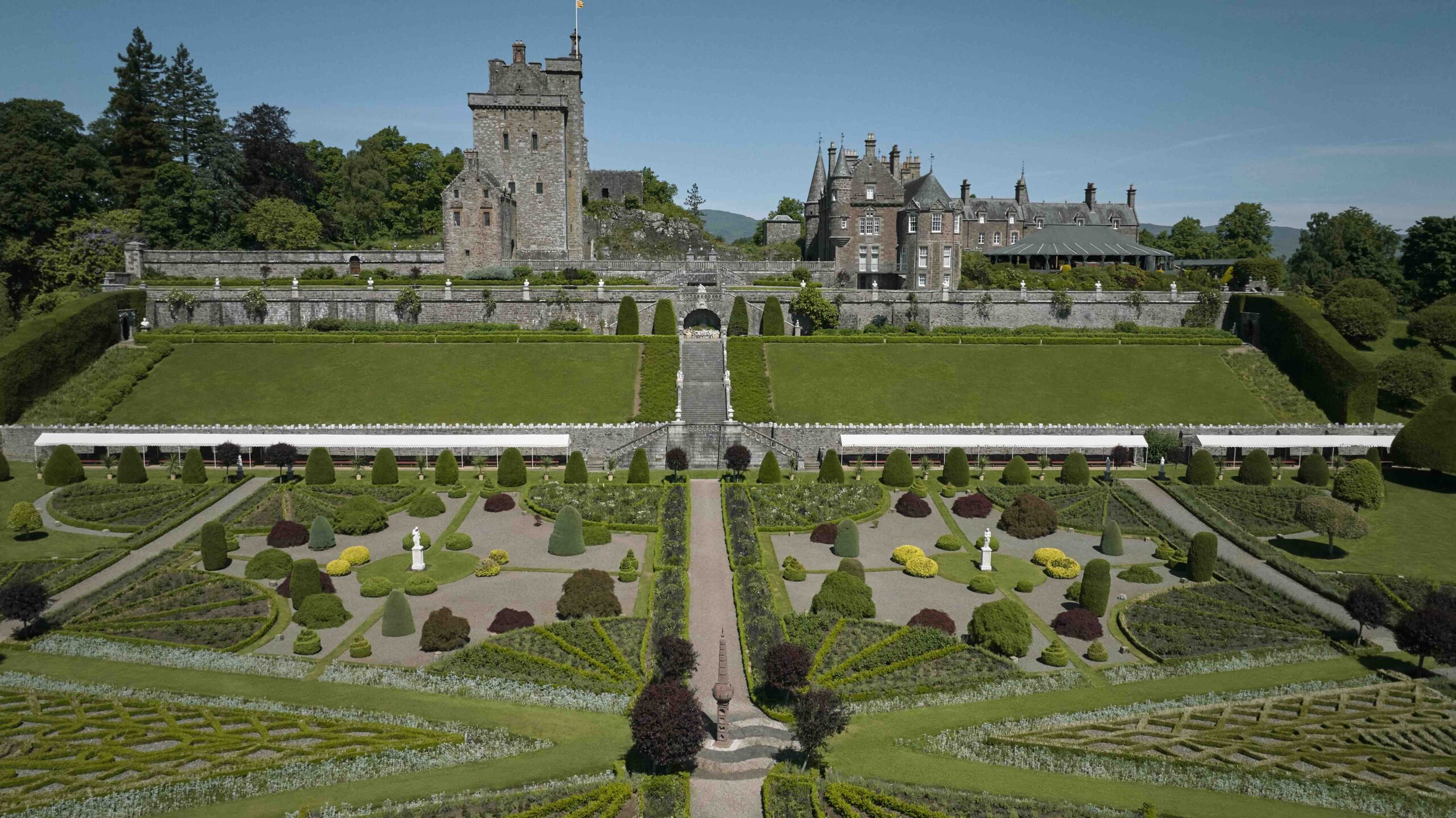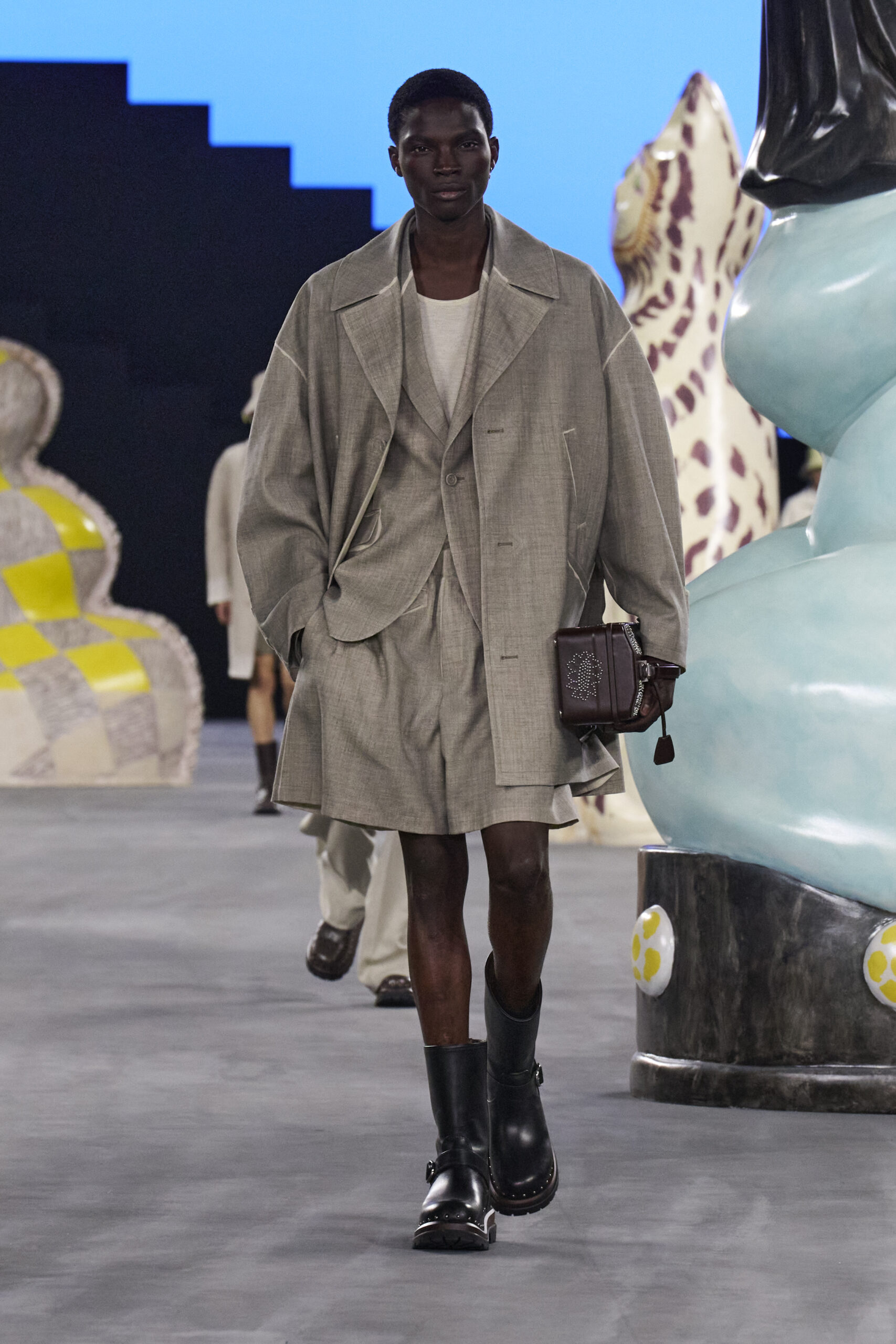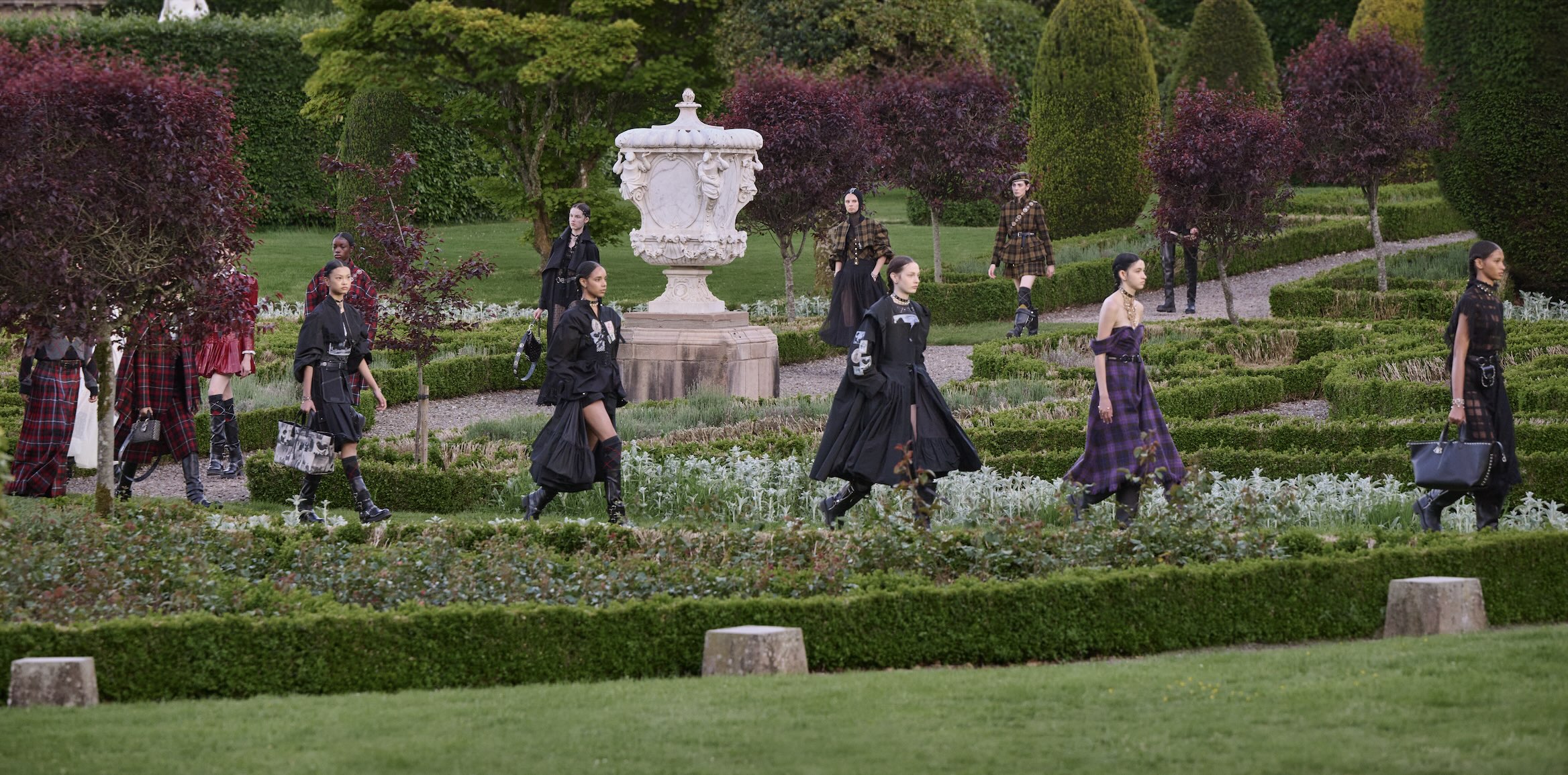
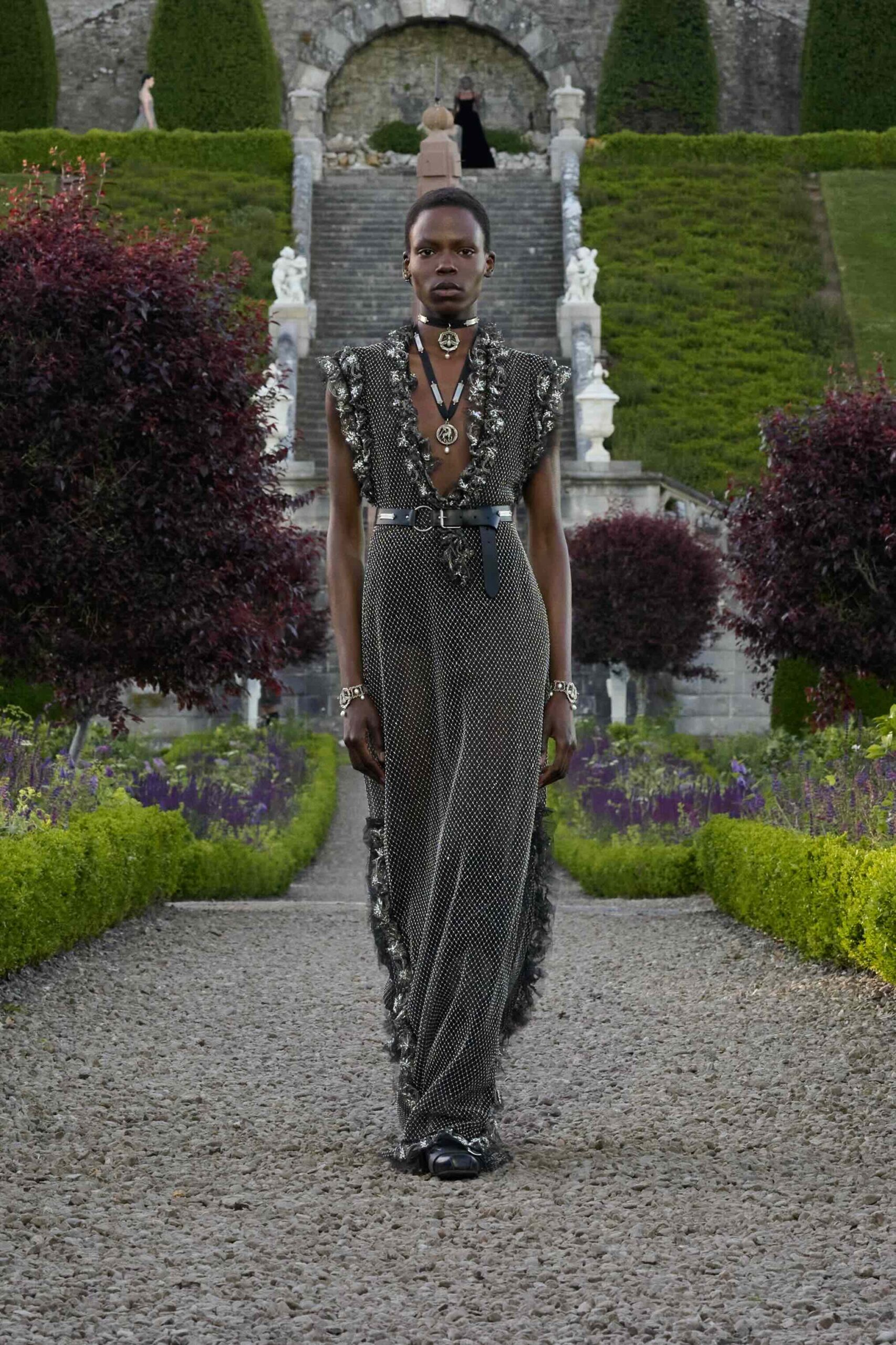
Maria Grazia Chiuri opened and closed the Dior cruise 2025 fashion show – held in the Renaissance gardens of Drummond Castle – with the sound of bagpipes. Situated at the top of a narrow, winding road, completely surrounded by trees, the 15th-century fortress has seen countless knights and royals come and go, and overlooks an impressive expanse of Italian-style gardens: through the interweaving of the Maison’s history with the dramatic and sometimes bloody history of Caledonia, clothes defined by a deeply rooted sense of realism, but at the same time transcending it, are paraded.
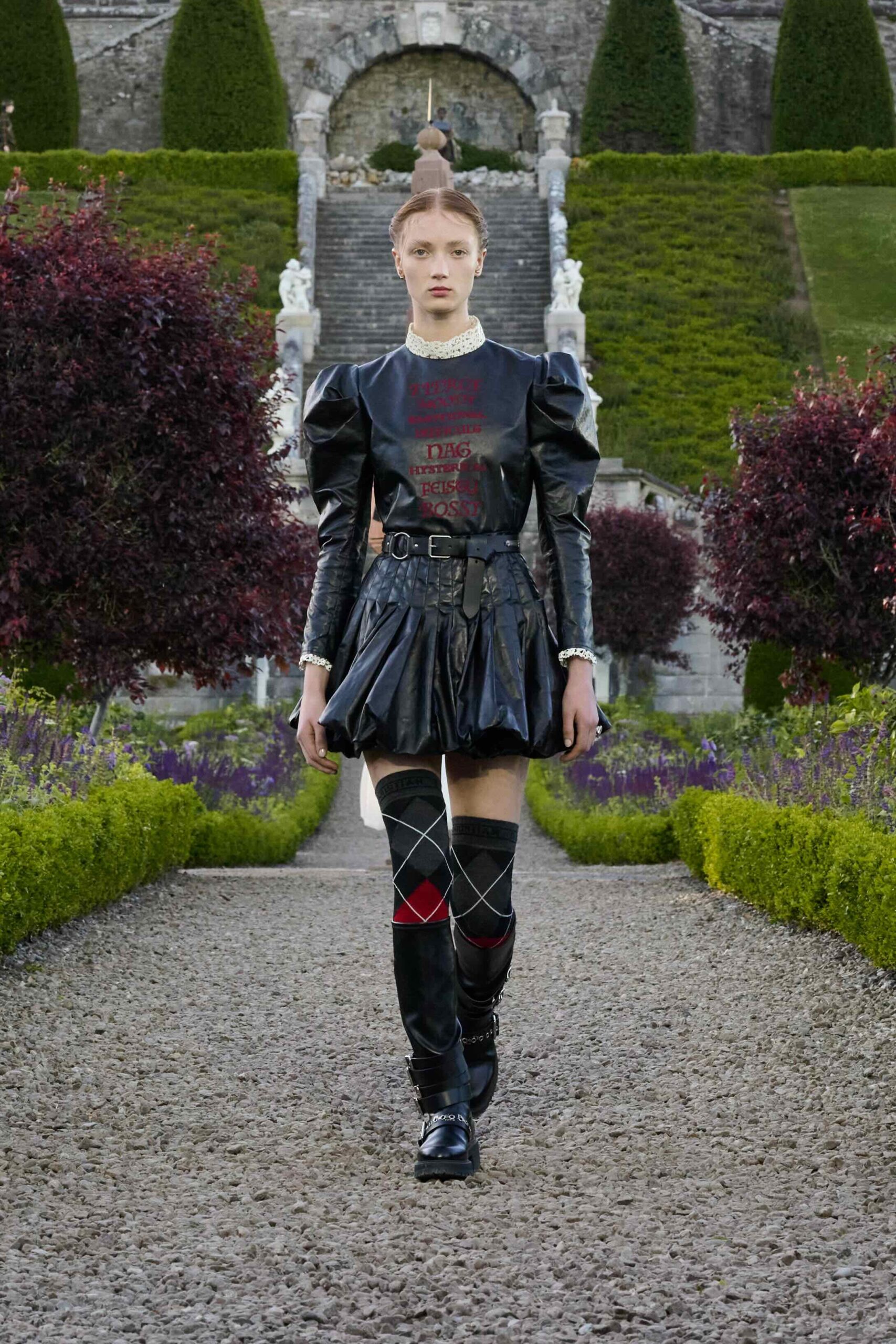
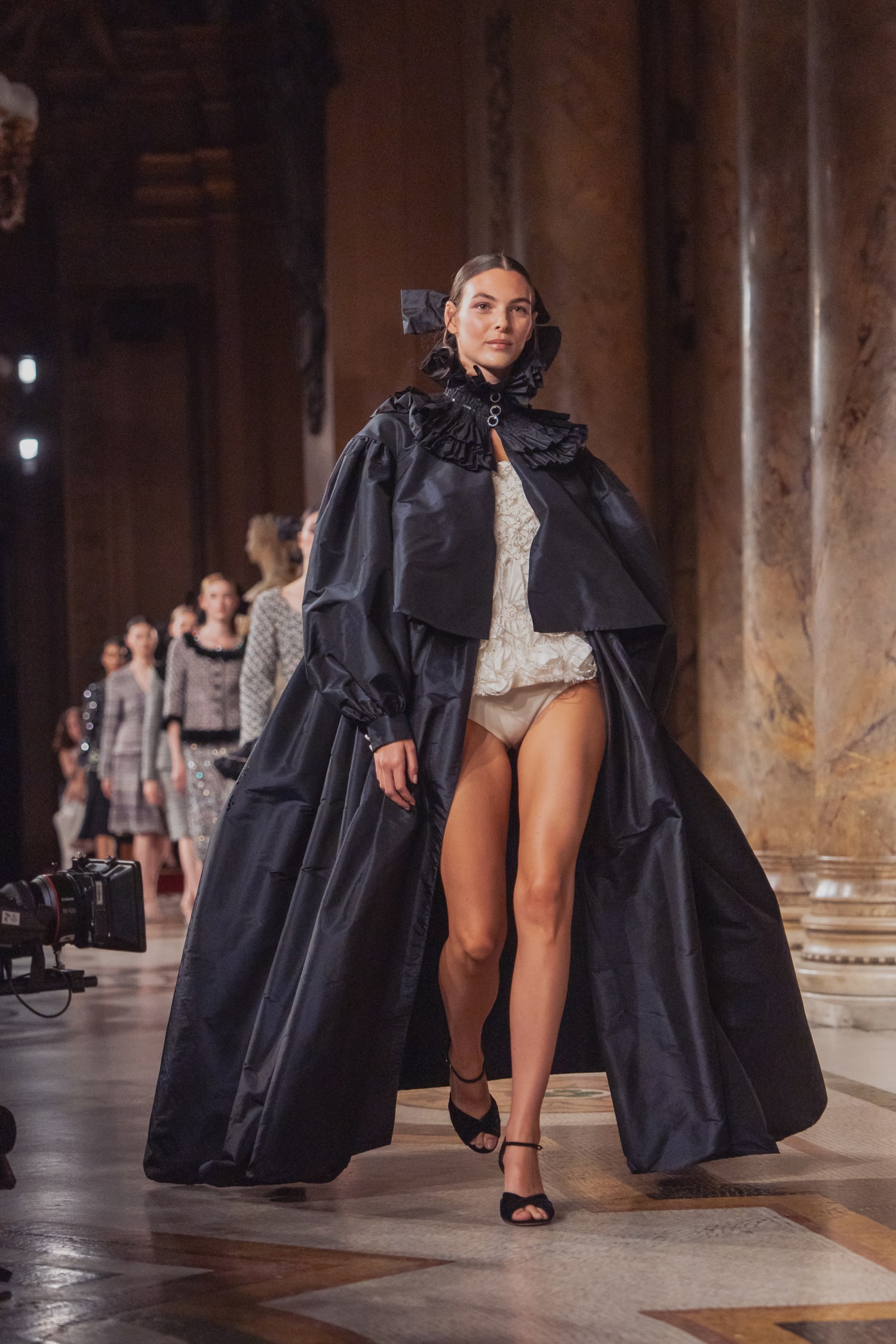
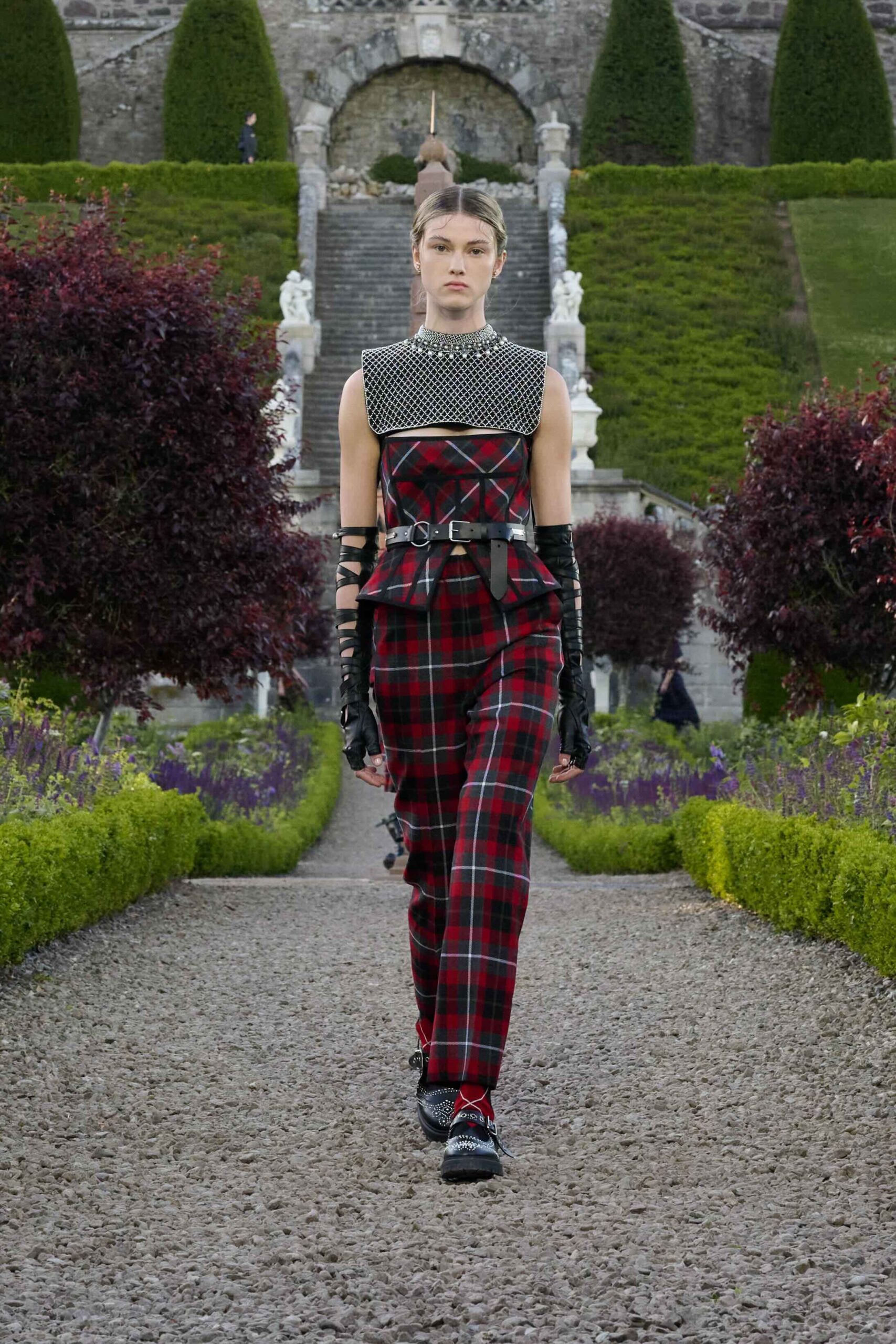
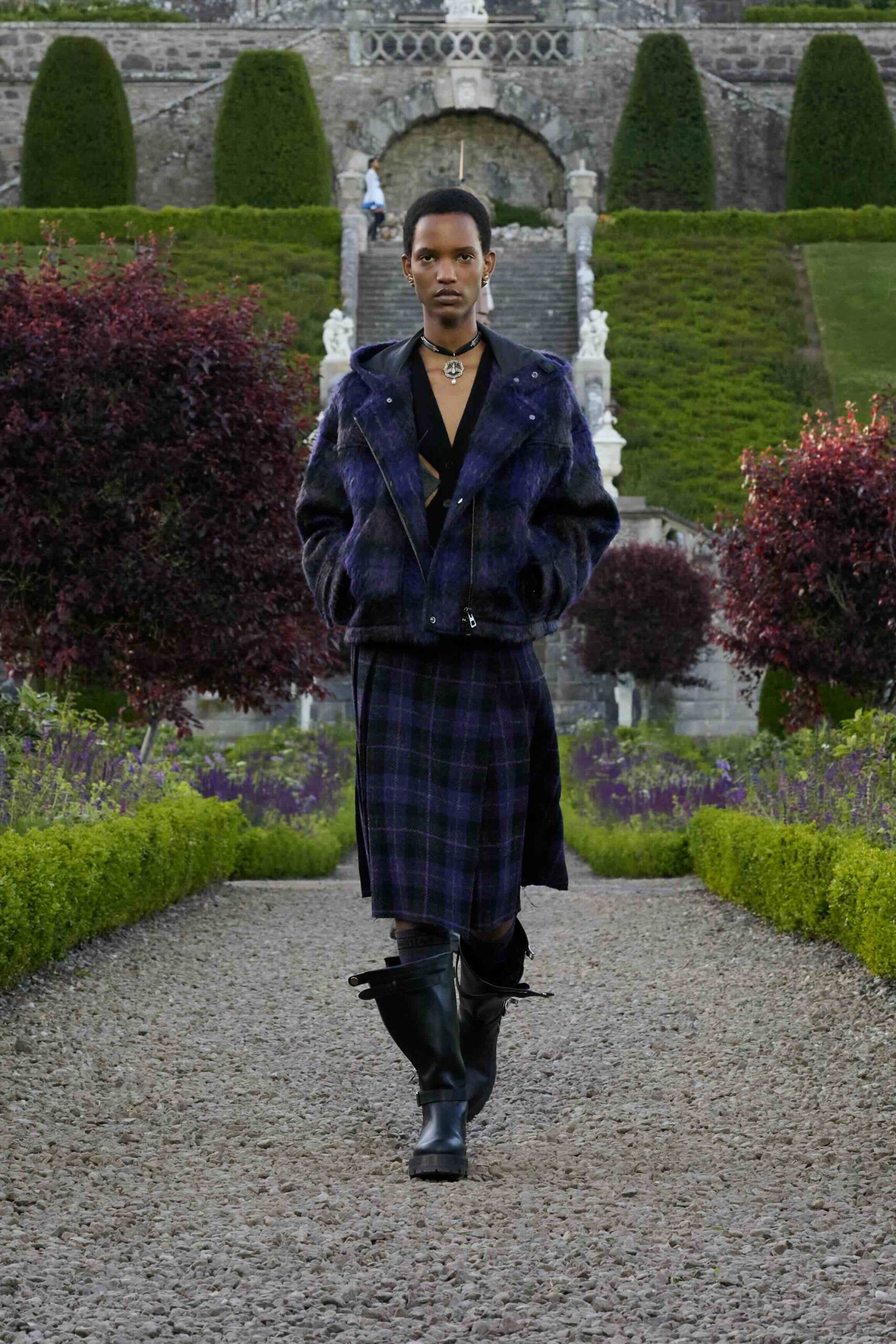
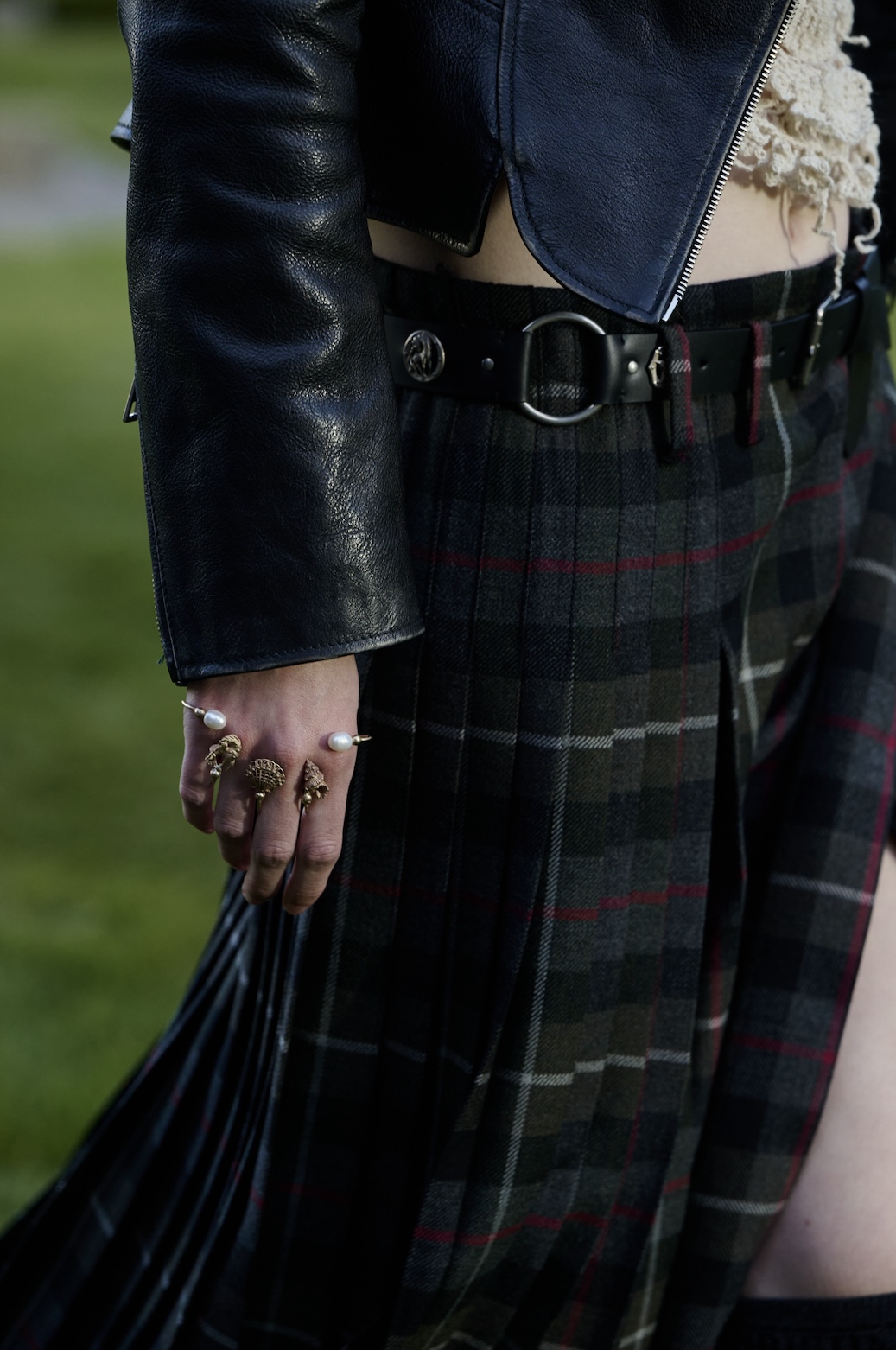
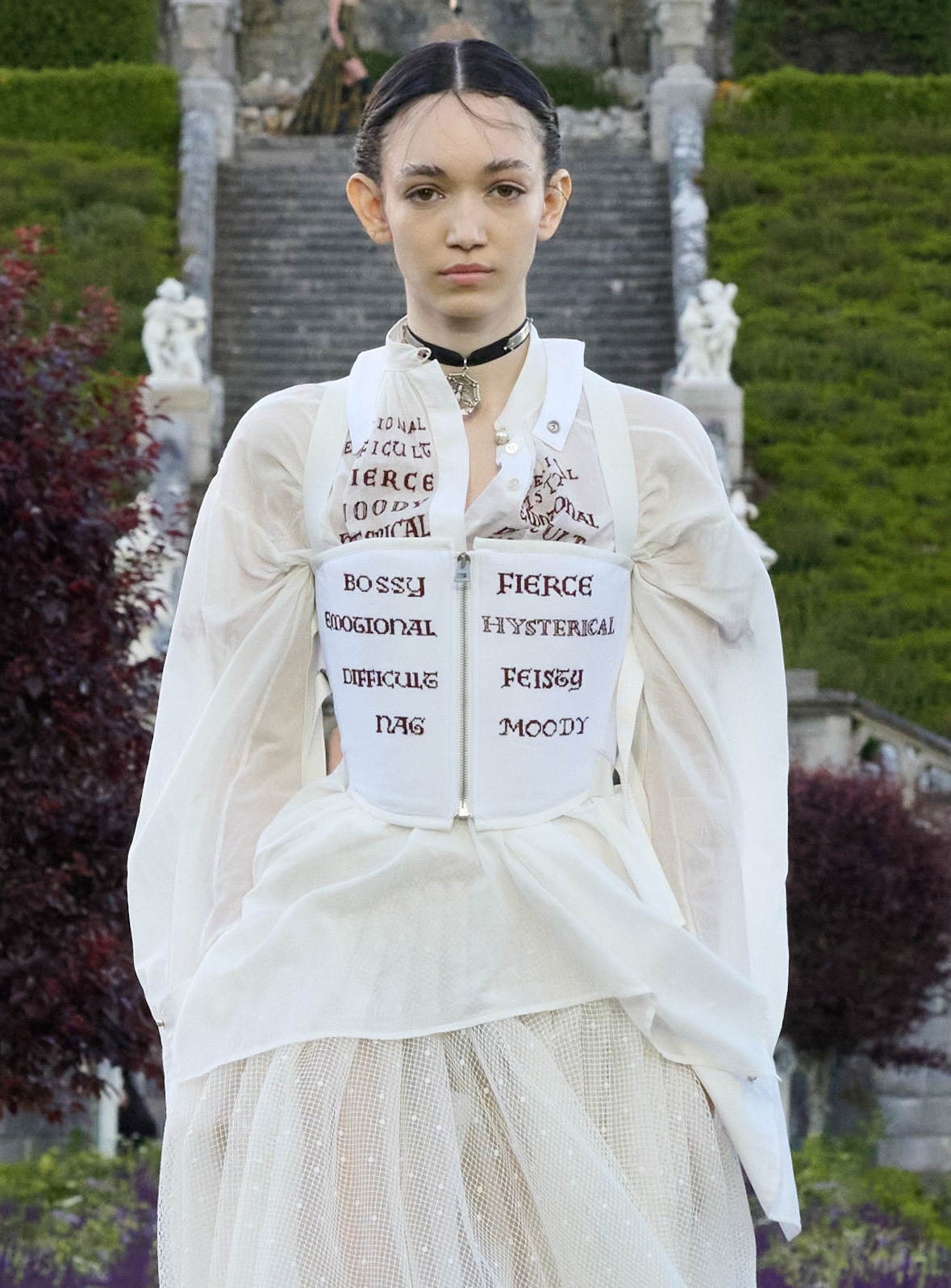
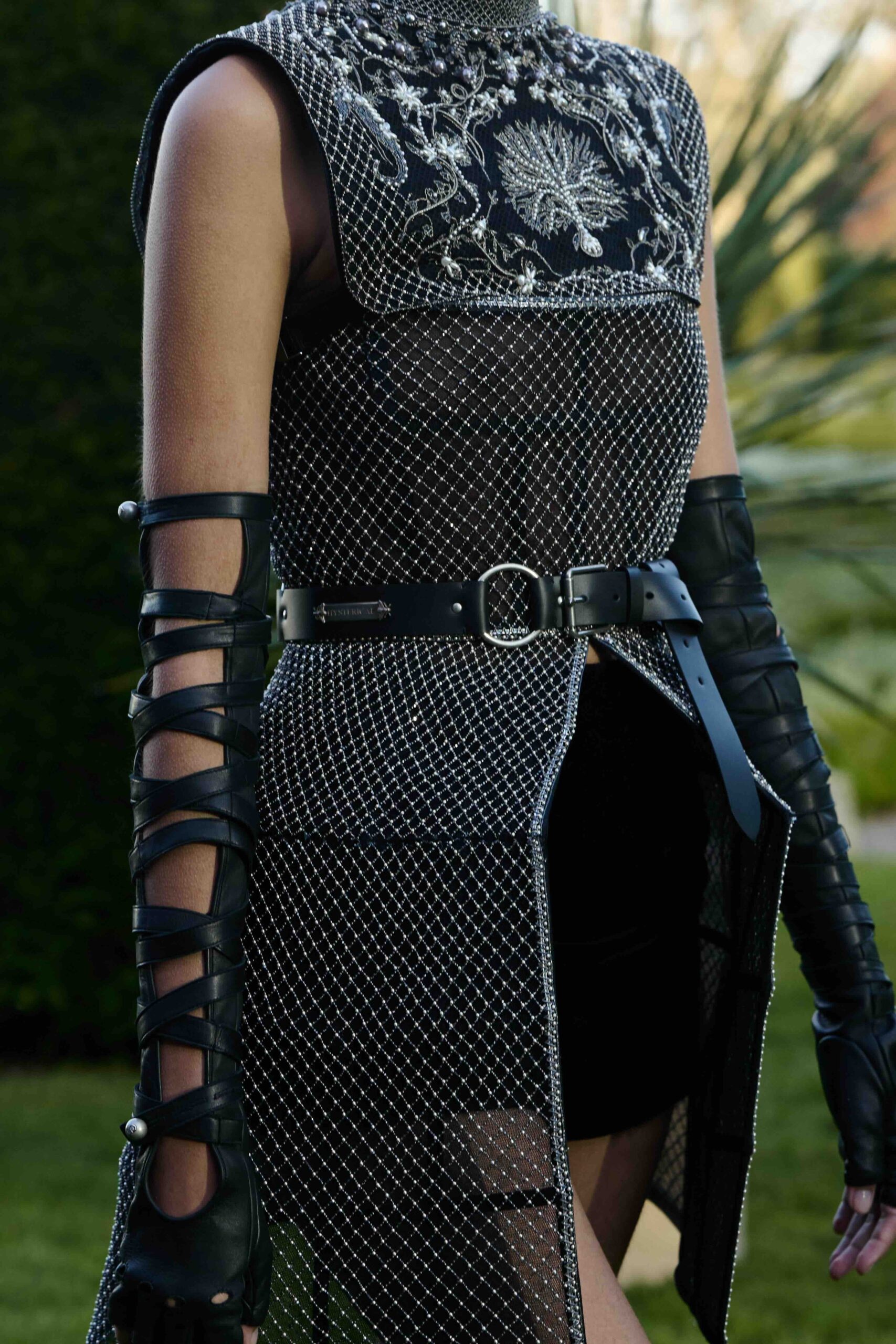
Aware of how much Scotland has influenced fashion in general and Monsieur Dior in particular, who walked the catwalk here in 1955 for charity, Maria Grazia Chiuri takes Scottish paintings and kilts in the direction of punk through jackets with cinched waists, wide skirts, massive boots and slingbacks with ribbons, the materiality of local customs and textile customs filtered through a collection that has variously drawn on the geopolitics of textiles. Photographic images from the 1955 Spring/Summer presentation become prints or are applied to the edge of cabans and are, on the inside, amulet garments. The outfits hold together contrasting elements, materials of different textures such as velvet and lace, and dress the models with intransigent pride like the new wave music of the Skids. Corsets carry a robust, armorial feel. Many silhouettes have wide sleeves, which in white shirts burst out under small dresses with ruffled skirts and the shiny bibs of embroidery, embroidery that returns on many pieces, dark, iridescent, moonlight or studded with pearls, while lace collars illuminate black. Tartan, also in very light fabric, acts as a common thread and a tribute to the symbol that is kilts.Then dresses of different lengths and jackets, coats or capes with large hoods. There are small jackets in the grey of masculine fabrics and Bar jackets decorated with frogs in black velvet, which returns in the evening gown with its exaggerated skirt highlighted by the petite bust, while woven nets become long dresses that in turn move lightly in the mauve of nostalgia. In this imaginative choreography, the sequence of the collection unfolds as the termination of a network of interconnected elements, a narrative that extends as far as reinterpreting the stories and characters that preceded it.
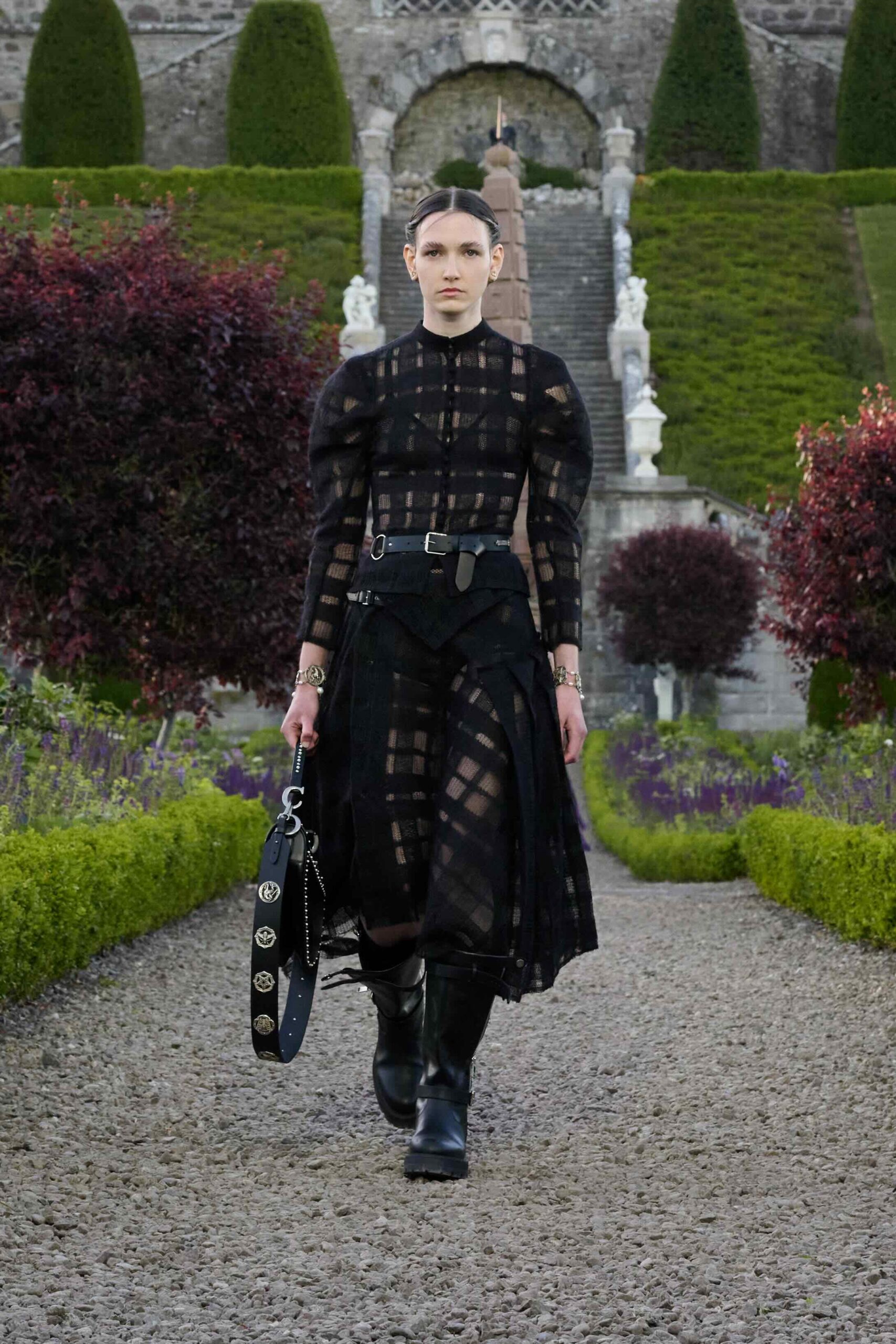
“Scotland is an important reference in the fashion world, and I wanted to interpret it in a different way. For my generation it is strongly associated with punk, but there is another way to explore it, and that is through textiles”.
The unicorn and the thistle, symbols of Scotland, inhabit a new declination of the millefiori motif and become heraldic embroidery to recall the mastery of that technique – or form of self-preservation? – of Mary Stuart that emerges in Clare Hunter’s story: Embroidering Her Truth: Mary, Queen of Scots and the Language of Power. The embroidery of a map of Scotland, a sort of device for moving freely in one’s own imagination, produces on some of the creations in the collection a cartography of the collaborations and cultural encounters organised specifically for this fashion show. Tartan abounds, the fabric symbol of this land that in the many colour combinations and in the shape of the kilt has traversed and continues to traverse, from the romantic to the punk, the history and the present of dressing. Flower embroideries cover the bodices. The words fierce, nag, emotional, difficult and bossy emerge on the fabrics, which are no longer just clothes but wield the power of prejudice and overturn it. And in contrast to the power of these words even more lace, in gunmetal and gold, overlaid and stitched together, with the seams rippled by tiny lines of ruffles. Everything is accessorised with pearls suspended from leather collars, studded and quilted leather crossbody bags, and unbuttoned biker boots. As with her previous resort shows – in Mexico, Spain and Morocco – Dior has chosen to collaborate with local designers and artisans: tweed and cashmere are produced by Johnstons of Elgin; knitwear is carefully assembled by Esk Cashmere; ceremonial headwear is sewn by Robert Mackie. The intense, relentless research and almost anthropological sense of how Chiuri works on her collections reveal a desire to go deeper, to seek the meaning of what is being done and why.